
myEquifax
Equifax IncorporatedFinance
4.6991.00 Reviews
- Version
- 1.11.0
- Installs
- 500.00K
- Age Rating
- Everyone
Screenshots
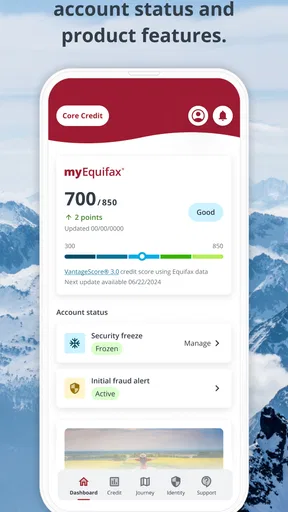
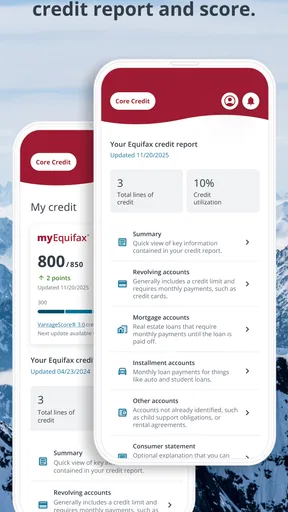
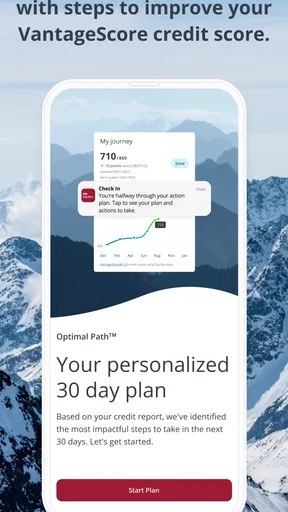
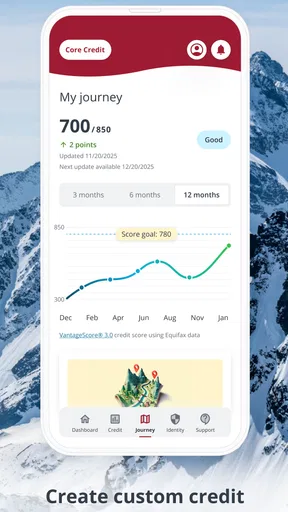

Our Review of myEquifax
 Analysis by Appyee
I approached myEquifax as a tool for the unglamorous but important part of personal finance: keeping an eye on your credit life before a problem becomes urgent. It is a free finance app from Equifax Incorporated, aimed at helping people begin or maintain a credit routine rather than replacing a full budgeting system. After using it, my view is that its value depends less on how often you open it and more on whether you give credit monitoring a sensible place in your monthly habits.
The first impression is straightforward. The app is built around the idea of starting your credit journey, so it makes the most sense for someone who wants a clearer relationship with their credit information without committing to a paid financial service. Its Everyone age rating also makes it approachable for a broad audience, although younger users should still understand that credit decisions involve real financial consequences and should not be treated like a score-chasing game.
What myEquifax feels like after the first week
During the first week, the appeal comes from having a dedicated place to think about credit instead of treating it as something that only matters when applying for a card, loan, rental home, or phone contract. That change in mindset is more useful than any novelty. I found the app best suited to short, purposeful visits: checking what is happening, learning what deserves attention, and then closing it rather than repeatedly refreshing it.
That is an important distinction from a general banking app. A bank application is usually designed around transactions, balances, transfers, and payments with one institution. myEquifax belongs to a different part of the finance category. Its purpose is credit awareness, so it can sit alongside a banking app rather than compete directly with it. A budgeting app may help me decide whether I can afford a payment, while this app is more relevant to understanding the credit side of my financial profile.
The app comes from Equifax Incorporated, which gives it a clear connection to the credit-reporting world. That makes it more relevant than an anonymous score tracker for users who specifically want an Equifax-focused credit routine. At the same time, I would not treat one credit source as the complete picture of every lender’s decision. Different lenders can use different information and scoring methods, so the app should support better awareness, not create false certainty.
One of my practical recommendations is to open it when there is a reason to review your credit, not whenever you feel anxious about it. For example, if I were preparing to apply for housing, comparing borrowing options, or checking my finances after changing an account, I would use the app as one checkpoint in a broader review. I would also keep a separate note of dates, account changes, and questions. That turns a casual glance into a repeatable process.
The first-week experience is therefore strongest for beginners. Someone who has never paid attention to credit may appreciate having a focused starting point. The app’s free price removes an obvious barrier to trying it, and its presence on Android from a relatively recent release gives it a current place in a mobile-first routine. It requires Android 8.0 or later, so users on very old devices should check compatibility before planning around it.
Useful habits are more important than constant checking
A common mistake with credit apps is assuming that more checking automatically means better financial control. In practice, frequent checking can become tiring without improving decisions. I would begin with one calm review after an important financial change, then establish a monthly reminder if that feels helpful. The goal is to notice meaningful developments, not to turn a score or report into a daily mood indicator.
Another useful habit is to review credit information before submitting applications, rather than immediately afterward. That gives you time to spot an unfamiliar item or remember an account detail that needs clarification. It also reduces the temptation to apply impulsively simply because the app is open. For me, this is where the product can earn its place: it encourages preparation before a financial decision.
The app has attracted a strong response in its category, with an average rating of 4.6 from around eleven thousand ratings. I see that as evidence that many users find the basic experience worthwhile, but I would still judge it against my own needs. A high average cannot tell me whether I want a detailed budgeting workspace, broader credit coverage, or a service with more educational guidance.
Why the value can continue from month to month
Credit information is not a one-time task. Accounts change, applications happen, balances move, and personal circumstances develop. That gives myEquifax a recurring role that a one-off credit check cannot provide. The lasting value is not entertainment or constant discovery; it is the quiet ability to return when a financial milestone makes a review sensible.
My preferred monthly workflow would be deliberately short. I would first confirm that the account information looks familiar, then note anything that deserves follow-up, and finally compare the result with my own payment and account records. If something seems wrong, I would gather supporting documents before contacting the relevant company or credit-reporting service. The key insight is that the app can organize attention, but it cannot replace the user’s responsibility to investigate discrepancies carefully.
This workflow is especially helpful after moving, changing contact details, opening or closing an account, or preparing for a major application. It is also useful for people rebuilding credit who need a regular but emotionally neutral check-in. Instead of waiting for a rejection or surprise, they can make credit review part of their broader financial housekeeping.
There is a trade-off here. The more often a person’s finances change, the more useful a recurring credit check can become. Someone with very stable finances may only need occasional visits. That means the app’s long-term value is personal rather than universal. It will not automatically become essential just because it is installed; it earns that status when it fits a real decision-making pattern.
I would also avoid using it as a substitute for a spending plan. A credit-focused app can show the credit side of your financial life, but it is not where I would manage groceries, utility bills, savings targets, or debt repayment across all accounts. A budgeting application is usually the better choice for cash-flow control. A bank app is better for immediate account activity. myEquifax makes more sense as the credit-specific layer between those everyday tools and larger financial decisions.
A realistic everyday scenario
Imagine I am planning to rent a new apartment. Before applying, I open myEquifax during a quiet moment and review the information connected with my credit history. I do not assume that the app guarantees approval. Instead, I use it to identify anything unfamiliar, check whether recent account changes make sense, and decide whether I need to resolve a question before paying an application fee.
That small preparation step can prevent a rushed application from becoming the first time I notice a problem. If I find an issue, I would record the details, collect statements or confirmation emails, and contact the appropriate organization. I would not simply keep refreshing the app and hope the information changes. This is one of the most important practical limits: monitoring is useful only when it leads to sensible action.
The same approach works before comparing borrowing options. I can use the app to become more informed, then review the actual terms, fees, repayment schedule, and total cost offered by lenders. A credit app may help me prepare, but it should never be the only basis for accepting a financial product.
The maintenance burden is low, but not zero
MyEquifax is not demanding in the way a budgeting app can be. I do not need to categorize every purchase or maintain a detailed ledger each evening. That lighter workload is one of its strongest long-term qualities. A product that asks for too much effort often disappears from my phone, while a focused credit check can survive as an occasional routine.
Still, the maintenance burden shifts from data entry to interpretation. I need to remember why I opened the app, distinguish an unfamiliar item from a genuinely incorrect one, and follow up outside the app when necessary. That can be uncomfortable for users who expect a single screen to explain every financial question. Credit information often needs context, and no mobile interface can remove all of that work.
I would keep the app updated and use the current release, version 1.11.0, rather than relying on an old installation indefinitely. Updates are part of maintaining any finance app, especially one used for sensitive personal information. I would also protect the phone itself with a secure lock and avoid reviewing private financial details on a device other people can freely access.
One maintenance tip that is easy to overlook is keeping personal records outside the app. If I notice something that needs investigation, I would write down the date, the account involved, and the action I plan to take. That creates a simple audit trail and prevents repeated checking from replacing progress. It also helps if I need to explain the issue to a lender or another organization later.
The app’s free model makes it easier to keep installed without adding a subscription decision to the routine. That does not mean the surrounding financial decisions are free or risk-free. I would still read any offer or recommendation carefully and avoid assuming that access to credit information is the same as approval for credit.
Where fatigue can set in
The main source of fatigue is repetition without a clear purpose. If the information has not changed and I have no upcoming financial decision, opening the app every day can quickly feel pointless. Users who want constant novelty, detailed spending analysis, or a wide dashboard of every financial account may find the experience too narrow.
Another possible frustration is the emotional weight of credit monitoring. A person rebuilding after missed payments or financial hardship may feel tempted to check compulsively. In that situation, I would use a scheduled review and focus on concrete actions rather than judging progress from one visit. The app can support a plan, but it cannot make difficult financial circumstances feel simple.
There is also a comparison issue. If your main need is a complete view across multiple credit-reporting sources, a broader service may fit better. If your main need is managing money before the end of the month, choose a budgeting tool. If your main need is seeing transactions instantly, your bank’s application will usually be more direct. myEquifax is most convincing when the question is specifically about credit awareness connected to Equifax, not when the question is “How is my entire financial life doing?”
I would also skip it if I am unwilling to act on what I find. Installing a credit app for reassurance, then ignoring unfamiliar information, does not provide much protection. The better approach is to decide in advance what deserves follow-up and how much time I can give the review. That keeps the app from becoming either a neglected icon or a source of unnecessary worry.
Its audience size suggests that the product has found a practical role, with more than five hundred thousand installs and around nine hundred ninety reviews visible in its store presence. Those figures show reach and engagement, but they do not change the central judgment: the app’s usefulness comes from disciplined, occasional use rather than popularity alone.
Who should keep it installed?
I would recommend keeping myEquifax installed if you are beginning to understand credit, preparing for a major application, rebuilding your financial profile, or simply want a dedicated Equifax-oriented checkpoint. It is also a sensible companion to a bank app and a budgeting app because it addresses a different question. The free entry point makes experimentation reasonable for someone who wants to see whether a credit routine will stick.
I would be more cautious about recommending it to someone who expects a full financial command center. It is not the tool I would choose for household budgeting, investment research, debt snowball planning, or comparing every credit source in one place. Those needs call for different tools, and forcing them into a credit-monitoring app usually creates confusion.
For a first-time user, I suggest starting with a specific purpose: review before an application, check after an account change, or establish a monthly credit habit. Keep notes on anything that needs action, and do not treat a clean-looking review as permission to borrow more than you can repay. That simple approach makes the app more useful and reduces the chance of turning it into a passive score-watching exercise.
My long-term verdict
After the novelty fades, myEquifax earns space on my phone only when I give it a defined job. It does not need to be opened constantly, and I would not want it to become the center of my financial life. Its strength is quieter: it gives credit monitoring a recognizable place in a routine that might otherwise be forgotten.
I like the low financial barrier, the focused purpose, and the modest maintenance demand. I also appreciate that it can support practical moments such as preparing for a rental application or reviewing changes after opening an account. The limitations are just as important: it is not a complete budget, not a universal view of every lender’s process, and not a replacement for investigating errors or reading borrowing terms carefully.
My final recommendation is positive but specific. Keep it as a credit-maintenance tool, not as a complete money-management system. If that distinction matches what you need, the app can provide recurring value without demanding daily attention. If your priority is cash flow, broad financial aggregation, or detailed planning, another category of app will serve you better. For users who want a simple way to begin a credit habit and return to it when real decisions arise, myEquifax is a sensible free addition.
Verdict
Strengths of myEquifax
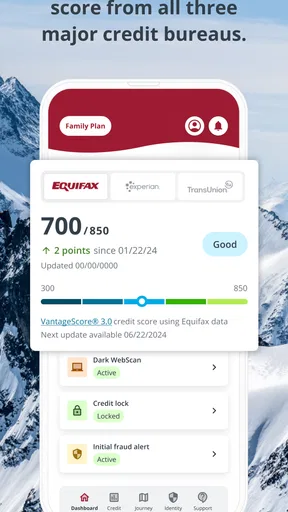
- Free access to Equifax credit reports and score tracking
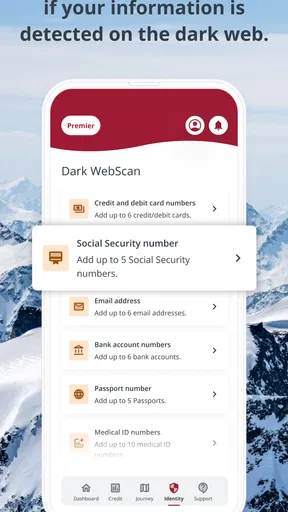
- Credit monitoring alerts can help detect suspicious activity quickly
- Simple dashboard makes account details easy to review
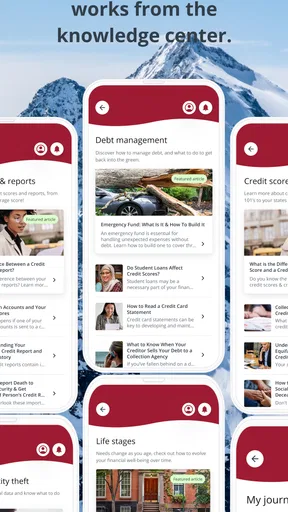
- Identity protection resources are available within the app
- Supports secure document and account management on mobile
Limitations of myEquifax
- Some features require a paid Equifax subscription or eligible plan
- Credit score updates may not be available in real time
- Identity verification can be frustrating if details do not match
- App usefulness depends on Equifax coverage in your country
- Users may receive marketing offers for additional financial products
Similar Picks in This Category
View All
Google Wallet
Google LLC4.3

Airtel: Recharge, Bank & Loans
Airtel4.0

PayPal - Pay, Send, Save
PayPal Mobile4.2

DANA Indonesia Digital Wallet
PT Espay Debit Indonesia Koe4.5

Binance: Buy Bitcoin & Crypto
Binance Inc.4.8

Cash App
Block, Inc.4.7
Frequently Asked Questions
What is myEquifax, and what can I use it for?
myEquifax is Equifax’s mobile and online service for accessing and managing parts of your credit and identity information. Depending on your country and account, you may be able to review your credit report, monitor changes, receive alerts, manage personal details, and explore identity-protection features. Available tools, reports, and subscription options can vary by region and by the Equifax products connected to your account.
Is myEquifax free to download and use?
The myEquifax app may be free to download, but not every feature is necessarily free. Some users can access basic account or credit-report information without payment, while enhanced monitoring, identity protection, credit scores, or additional reports may require a subscription or eligibility through another service. Before confirming anything, review the pricing, renewal terms, trial conditions, and cancellation policy shown in the app.
How do I create an account and verify my identity in myEquifax?
To use myEquifax, you generally need to register with personal information that matches Equifax’s records, such as your name, address, date of birth, and other identifying details. The service may ask security questions, send a verification code, or request additional identity checks. Use accurate information and follow the recovery process carefully, because failed verification attempts can temporarily restrict access.
Is my personal and financial information secure in myEquifax?
myEquifax is designed to protect sensitive credit and identity information using account-security measures such as login credentials, verification steps, encryption, and alerts. However, no online service is completely risk-free. Use a unique password, enable available multi-factor authentication, keep your phone and operating system updated, and avoid signing in through suspicious links or unsecured public networks.
What should I do if I find an error, suspicious activity, or an unfamiliar account?
If myEquifax displays inaccurate personal information, an unfamiliar credit inquiry, or an account you do not recognize, document the details and use the dispute or support options provided by Equifax. For suspected identity theft, change your passwords immediately, secure related accounts, and consider contacting the relevant financial institution and official fraud-reporting authorities. Do not ignore alerts, even if the activity appears minor.
